
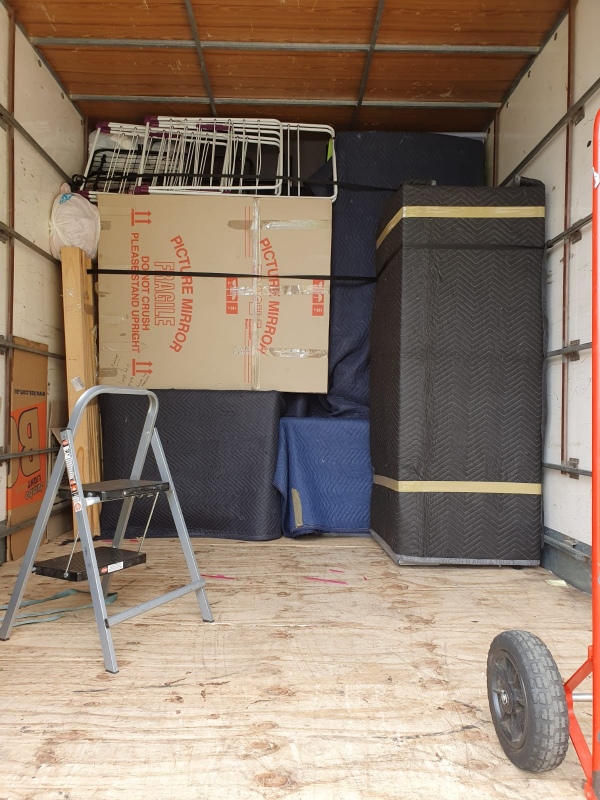
Before you book a Canberra removalist, confirm four things: a written quote based on an inventory (not a phone guess), how travel time and minimum charges are applied, what the transit cover limit, excess and owner-packed exclusions actually are, and who is turning up — employed crew or subcontractors, how many, and what size truck. Then check the ABN, check AFRA membership, and read the three-star reviews across two platforms.
Most people move house in Canberra every few years at most, which means almost nobody is an experienced buyer of removals. You get one shot at picking well, on limited information, usually under time pressure.
This guide covers what actually separates a competent removalist from a risky one, what to ask before you hand over a deposit, and the Canberra-specific things that catch people out — narrow inner-north streets, apartment lift bookings, unfinished kerbs in the new estates, and a booking calendar that gets very tight between November and January.
Work through it in order. The whole thing takes about fifteen minutes and it's the cheapest insurance you'll buy all move.
1. Start with the quote — and understand which kind you're getting
There are two common pricing models in Canberra removals, and they behave very differently.
| Hourly rate | Fixed price | |
|---|---|---|
| How it's priced | Crew + truck, charged per hour | One quoted figure for the whole job |
| Best for | Straightforward local moves where volume is predictable | Interstate moves, or jobs where you want certainty |
| Your risk | Overruns cost you | Under-scoping means a variation on the day |
| What to nail down | What starts and stops the clock | Exactly what's included, and what triggers a variation |
Local Canberra removals commonly run in the range of $130–$180 per hour for two removalists and a truck, moving up from there for larger crews and bigger vehicles. Treat any figure well below that range with suspicion rather than enthusiasm — it usually means something is being charged separately later. Our Canberra removalist cost guide breaks the ranges down by home size.
The questions that actually change your invoice
- How is travel time charged? Depot-to-depot, door-to-door, or a flat call-out fee? On a Canberra move this is often the single biggest difference between two quotes that look identical. A Tuggeranong-to-Gungahlin job crosses most of the city.
- Is there a minimum charge? Most operators have one. A two-hour minimum on a one-hour job changes the maths on small moves.
- What's included in the hourly rate? Blankets, trolleys, straps, shrink wrap, tape, basic disassembly and reassembly of beds and flat-pack? Or are these extras?
- Are stairs, lifts or long carries charged differently? Ask specifically. A third-floor walk-up is a different job to a ground-floor townhouse.
- Is the quote GST inclusive?
- What's the deposit, and what are the cancellation and reschedule terms?
- What happens if the job runs over? Is there a cap, or a call-you-first threshold?
2. Insurance: the most misunderstood part of the entire transaction
This is where people get hurt, because two completely different things are both called "insurance."
Public liability covers damage the removalist does to property — a gouged wall, a broken balustrade, damage to a building's common areas. It does not cover your belongings. Every legitimate operator carries it.
Transit protection / goods in transit cover is what applies to your things. This is the one to ask about, and the one where the detail matters:
- What's the cover limit, and is it per item or per consignment?
- What's the excess?
- Are items you packed yourself excluded? (Very commonly they are — the industry term is "owner-packed" or "PBO," packed by owner. If you pack the boxes, damage inside them may not be covered.)
- Are there excluded categories? Glass, stone benchtops, particleboard flat-pack, plants, and anything already damaged are frequent exclusions.
- Is cover automatic, or is it an optional add-on you have to elect and pay for?
Ask for a certificate of currency. It's a one-page document from the insurer confirming the policy is live, and any properly insured operator can produce one on request without fuss. If you're moving into or out of an apartment building, the body corporate or building manager will very likely require one anyway.
Also worth checking: your own home and contents policy. Many policies do not cover goods in transit, or cover them only when moved by a professional removalist. A five-minute call to your insurer before the move is worth making.
3. Check that the business is what it says it is
Four checks, ten minutes total.
- Look for AFRA accreditation. The Australian Furniture Removers Association accredits removalists against standards covering vehicles, equipment, premises, staff training and insurance, and it audits members. Two honest caveats: not every good removalist is a member, and membership on its own isn't a guarantee of a good day. But it does tell you an independent body has inspected the operation.
- Check the ABN. Search the business name on ABN Lookup. You're looking for an active ABN, an entity name that matches what's on the quote, and GST registration if they're charging you GST.
- Check that the name is consistent. The business name on the website, the Google listing, the quote and the invoice should all match. A trading name that appears nowhere official is worth a question.
- Read the reviews properly. Sort to the three-star reviews and the most recent ones — that's where the useful information lives. Look across more than one platform: Google, and the removals-specific sites like Muval, Find a Mover, Oneflare and HiPages. A run of five-star reviews all posted in the same fortnight is worth a second look.
4. Find out who is actually turning up
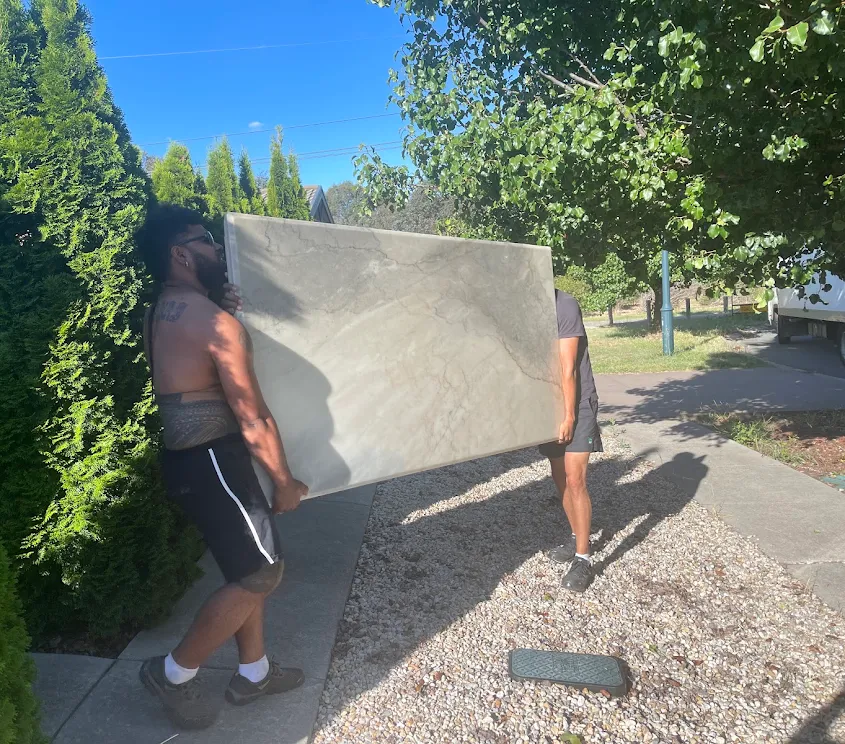
The name on the truck isn't always the crew doing your move.
- Are the removalists employed by the company, or subcontracted? Neither is automatically bad — plenty of good operators use trusted subcontractors in peak season — but you're entitled to know, because it determines who is accountable when something goes wrong and whose insurance applies.
- How many removalists, and what size truck? For a standard three-bedroom Canberra house you're usually looking at two to three crew and a large truck. If the numbers sound light for the job, the hourly rate stops being the relevant comparison.
- Will the person who quoted the job be involved on the day, or at least have briefed the crew?
- Is there a single point of contact if something changes on the day?
5. The Canberra-specific things that catch people out
Book earlier than you think
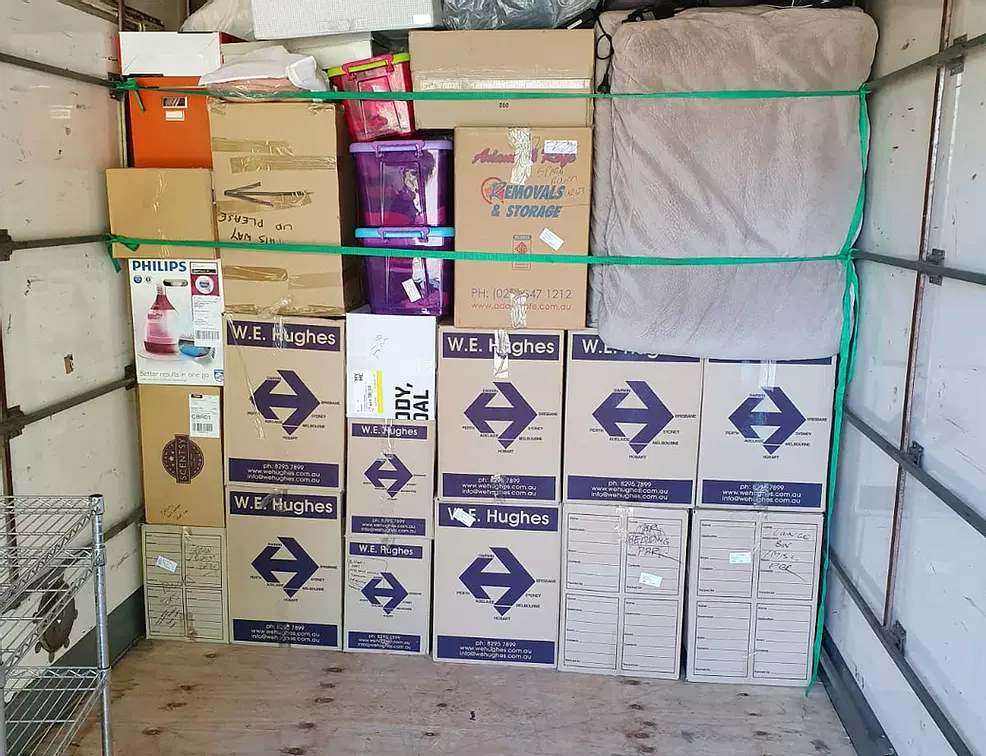
Canberra's peak removals season runs November through January, driven by the school year, the summer holidays and the tail of the year's property settlements. Late March and April get busy again. Within any month, the last week and the first few days of the next are the tightest, because that's when leases turn over.
For a peak-season move, two to four weeks' notice is a realistic minimum, and more for a Saturday or a month-end date. Outside peak, you have more room — and moving mid-month on a weekday is the single easiest way to get better availability.
Also note the ACT's own public holidays: Canberra Day in March and Reconciliation Day around the end of May don't exist in most of the country, and they affect both availability and rates.
Apartment and townhouse moves need paperwork, not just a truck
If either end of your move is an apartment building — Civic, Braddon, Kingston, Belconnen town centre, Gungahlin town centre, Woden — expect the building to have rules:
- A lift booking or service-lift protection requirement, often in a fixed time window
- A loading dock booking, sometimes with a height limit that rules out larger trucks
- A certificate of currency demanded by the building manager or body corporate before the crew is allowed in
- Restrictions on which hours moves can happen at all
Sort this out with the building manager a week ahead, not on the morning. Ask your removalist whether they'll deal directly with the building manager — many will, and it saves a lot of friction.
Older inner suburbs: access is the real constraint
Ainslie, Reid, Braddon, Forrest, Griffith and Yarralumla have narrow streets, mature street trees, deep grass verges and often no driveway a truck can turn in. A large truck may physically not be able to park where you need it. The practical consequences:
- A long carry from wherever the truck can legally stop — which costs time on an hourly job
- Possible need for a smaller shuttle vehicle ferrying to a larger truck
- Heritage-era doorways and narrow hallways that make large furniture genuinely difficult
Tell your removalist about access when you're getting the quote, not on the day. Send photos of the street frontage if you're unsure. A quote built on the wrong access assumption isn't a quote. Suburb-by-suburb notes are on our service areas pages.
New estates: different problems, same principle
In Whitlam, Denman Prospect, Taylor, Throsby, Jacka and the newer Gungahlin releases, the issues are unfinished kerbs and verges, single-lane access with construction traffic, unsealed sections, and driveways that may not be poured yet. Ask about floor and doorway protection too — you're moving into new finishes you'll be looking at for a decade.
The weather is a scheduling factor here more than most cities
Canberra winters bring frost, genuinely slippery surfaces early in the morning, and a working day that runs out of light by mid-afternoon. A July move that starts at eight is not the same job as a February move that starts at eight. Summer runs the other way — over 35°C, anything heat-sensitive needs thinking about, and so does hydration for the crew.
Crossing into NSW
Queanbeyan, Jerrabomberra, Googong, Bungendore and Murrumbateman moves cross a state border that makes no practical difference to the work. It sometimes makes a difference to the quote, though, so just ask whether it changes the rate or the travel-time calculation.
6. If you need storage in the middle
Settlement gaps are common, and storage during a move is a normal part of the job. It's also where the least specific questions get asked, so ask specific ones:
- Who handles your goods, and how many times? Removalist-managed storage often means your things are handled once into storage and once out. Self-storage means you're handling them, or paying for extra handling.
- Can you access your belongings mid-storage? If so, how much notice, and is there a fee?
- What's the minimum term and the billing period? Weekly, monthly, part-month?
- What does the security actually consist of? Ask for specifics — cameras, alarms, access control, who else has access — rather than accepting "secure."
- Is it climate controlled, and what does that mean here? Ask what temperature and humidity range is actually maintained, and whether it applies to the whole facility or one section. Canberra's temperature swing is wide enough that this matters for timber furniture, artwork, vinyl and electronics.
- Is it insured while in storage, and is that the same policy as the transit cover or a separate one?
7. Specialty items: ask before you book, not after
Some items are a different job, and some removalists decline them outright. If you own any of the following, raise it at quoting stage:
- Pianos — uprights and grands are different again
- Pool tables — usually require dismantling and re-levelling by a specialist
- Safes and gym equipment — weight limits on stairs and lifts become the constraint
- Artwork, antiques and mirrors — ask about custom crating
- Spas and outdoor items — often need a separate crew or equipment
- Fish tanks, plants and pets — commonly excluded entirely
Ask three things: do you move it, do you do it in-house or subcontract it, and is it covered by your insurance? A straight "we don't do pool tables, here's who does" is a better answer than a vague yes. For single heavy pieces, see our furniture removalists page.
8. Red flags
Any one of these is worth a pause. Two or more, walk away.
- Cash only, or a large deposit demanded before anything is in writing
- No written quote, or refusal to base a quote on an inventory
- No ABN, or an ABN that doesn't match the trading name
- No fixed business identity — no consistent name, no landline or verifiable address, a mobile number and nothing else
- Refusal to provide a certificate of currency
- Pressure to book immediately because "the last spot is going"
- A quote dramatically below everyone else's — this is almost always recovered on the day
- Vague answers about insurance. Anyone competent answers insurance questions crisply, because they get asked constantly
9. The one-page checklist
Print this or keep it open while you're calling around.
Quote
- Hourly or fixed — and I understand which
- Written quote received, based on an inventory
- Travel time basis confirmed
- Minimum charge confirmed
- Inclusions confirmed (blankets, trolleys, wrap, disassembly)
- Stairs / lift / long carry treatment confirmed
- GST status clear
- Deposit, cancellation and reschedule terms clear
Insurance
- Transit cover limit and excess confirmed
- Owner-packed exclusion checked
- Certificate of currency requested
- Own home and contents policy checked
The business
- AFRA membership checked on afra.com.au
- ABN verified on ABN Lookup
- Business name consistent across website, listing, quote
- Reviews read across at least two platforms, including three-star ones
The crew
- Employed or subcontracted — confirmed
- Crew size and truck size confirmed
- Day-of contact person identified
Access and logistics
- Both addresses' access described to the removalist
- Lift and loading dock booked, if applicable
- Certificate of currency supplied to building manager, if required
- Parking arranged where street access is tight
Extras
- Storage terms confirmed, if needed
- Specialty items raised and confirmed
Common questions
How far ahead should I book a removalist in Canberra?
Two to four weeks for a peak-season move (November to January), a Saturday, or a month-end date. One to two weeks is usually workable outside peak. Mid-month weekdays have the best availability.
How much does a removalist cost in Canberra?
Local moves commonly run $130–$180 per hour for two removalists and a truck, with larger crews and trucks costing more. What moves the final figure most is travel time treatment, access at both ends, and how well-packed you are before the crew arrives. Full breakdown in our Canberra removalist cost guide.
Is my furniture insured during the move?
Not automatically, and not by the removalist's public liability policy. Transit cover is a separate thing — ask what the limit is, what the excess is, and whether items you packed yourself are excluded.
What does AFRA accreditation mean?
The Australian Furniture Removers Association accredits members against standards for vehicles, equipment, premises, staff training and insurance, and audits them. You can check membership on afra.com.au. It's a useful signal, not a guarantee.
Do I need to be there on moving day?
Yes, or someone authorised to make decisions on your behalf. Someone needs to direct where things go, confirm the property is clear, and sign off at the end.
What should I do before the crew arrives?
Be fully packed, with boxes closed and labelled by room. Empty and defrost the fridge. Take beds apart if that's not in your quote. Clear a path to the door. Keep valuables, documents and medication with you rather than on the truck. On an hourly job, an hour of your preparation saves an hour of their time.
Truckmen Removals Canberra · Removals & Storage · Canberra ACT · 0434 906 926 · truckmen.au
Guide v1.0 · Last updated August 2026 · Figures are typical Canberra market ranges and individual quotes vary.
Back to Articles & Help Guides